In modern enterprise environments, technologies like VXLAN, SD-WAN, and ACI are not standalone products. They are architectural building blocks used to redesign how networks operate across data centers, cloud, and branch locations. The real value is not in deploying them, but in how they are designed, integrated, and operated as part of a broader network and security strategy.
A company like Safenet.au typically positions itself at exactly this layer: translating business requirements (performance, security, scalability, cost control) into working network architectures.
VXLAN – Data Center Segmentation and Cloud-Ready Networking
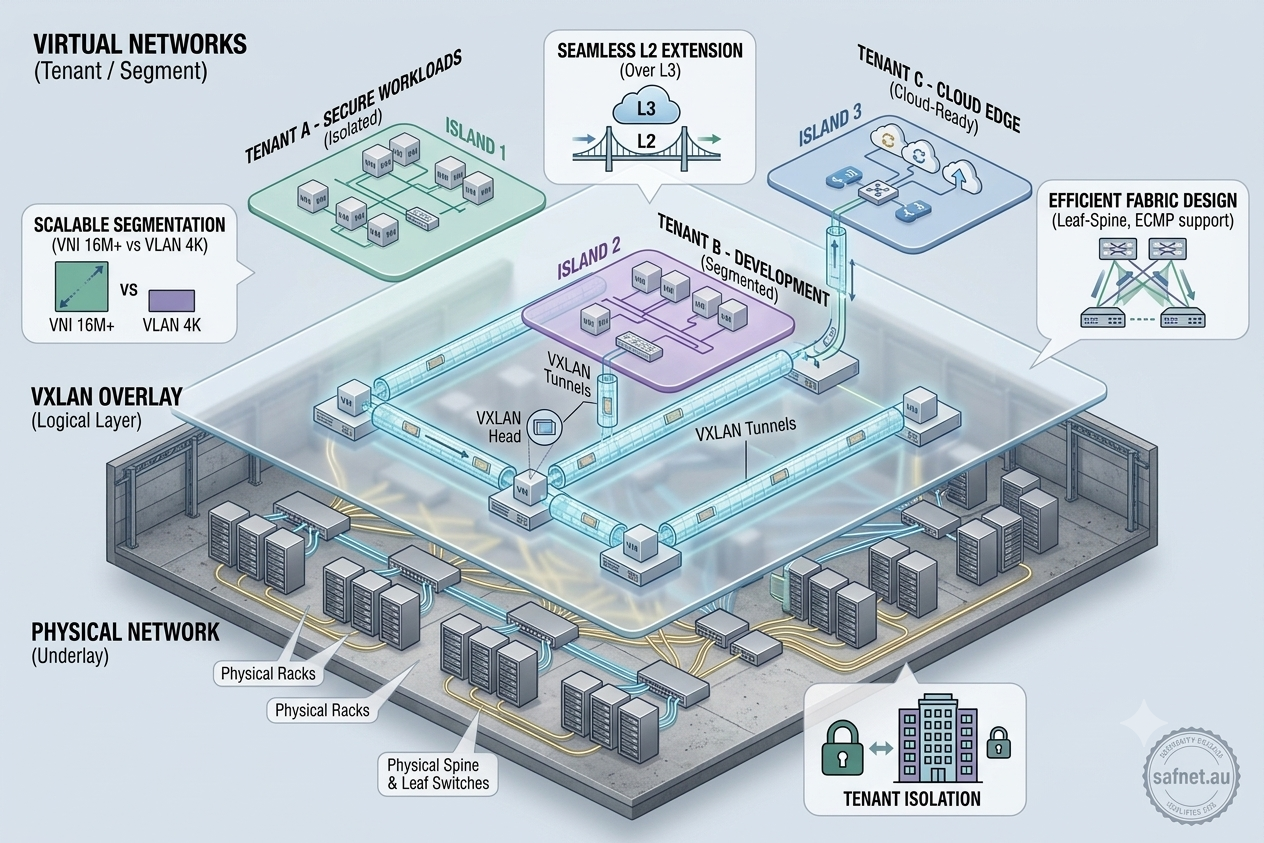
VXLAN is typically part of a larger data center modernization or cloud connectivity initiative.
Services usually focus on design rather than just configuration:
Data center fabric design: building leaf-spine architectures that support scalable VXLAN overlays
Network segmentation strategy: designing tenant isolation (multi-tenant environments, dev/test/prod separation, micro-segmentation)
VXLAN EVPN implementation: enabling scalable Layer 2 extension over Layer 3 underlays
Cloud connectivity integration: extending VXLAN-based segmentation into hybrid cloud environments (AWS/Azure connectivity patterns)
Migration planning: moving from legacy VLAN-based designs to VXLAN without breaking production workloads
Operational modeling: ensuring monitoring, troubleshooting, and change control don’t collapse under abstraction layers
Business outcome: the data center stops being a fragile VLAN jungle and becomes something that can actually scale without constant redesigns.
SD-WAN – Branch Connectivity and Application Optimization
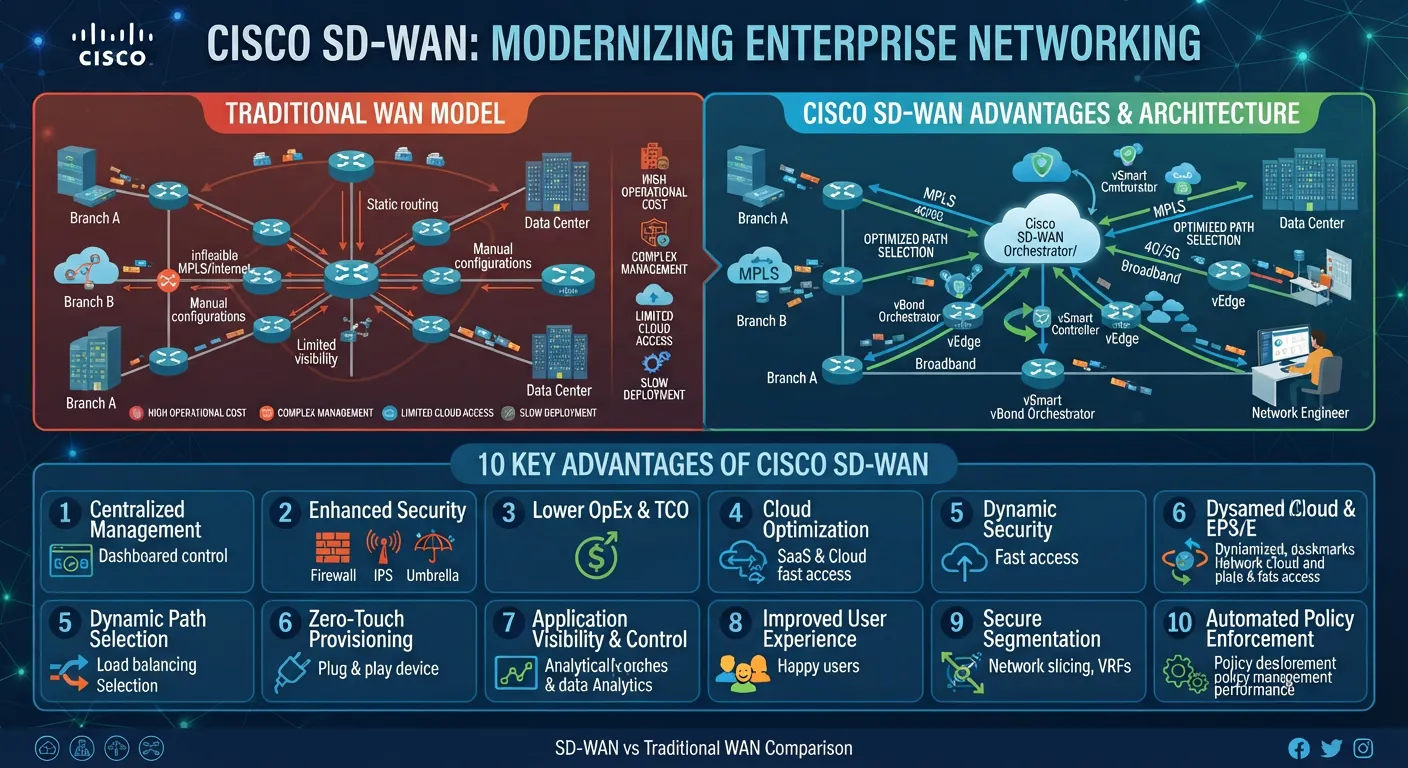
From a service perspective, SD-WAN is usually delivered as part of a full WAN transformation program, not just a box rollout.
Safenet-type services typically include:
Network assessment: reviewing existing MPLS, broadband, VPN, and branch connectivity to identify bottlenecks and cost inefficiencies
SD-WAN architecture design: defining hub-and-spoke vs full mesh vs regional breakout models depending on business structure
Hybrid WAN design: combining MPLS + internet + LTE for redundancy and performance optimization
Application-aware routing policies: ensuring critical apps (ERP, VoIP, SaaS) get priority paths while non-critical traffic is optimized for cost
Security integration: embedding firewalling, segmentation, and secure internet breakout (often aligned with SASE models)
Migration strategy: moving branches from legacy MPLS to SD-WAN without downtime chaos (in theory… in practice there’s always some chaos)
Business outcome: lower WAN costs, better application performance, and fewer “why is the branch down again?” incidents.
ACI – Policy-Driven Data Center Automation
ACI (Application Centric Infrastructure) is less about “networking” and more about policy automation for infrastructure.
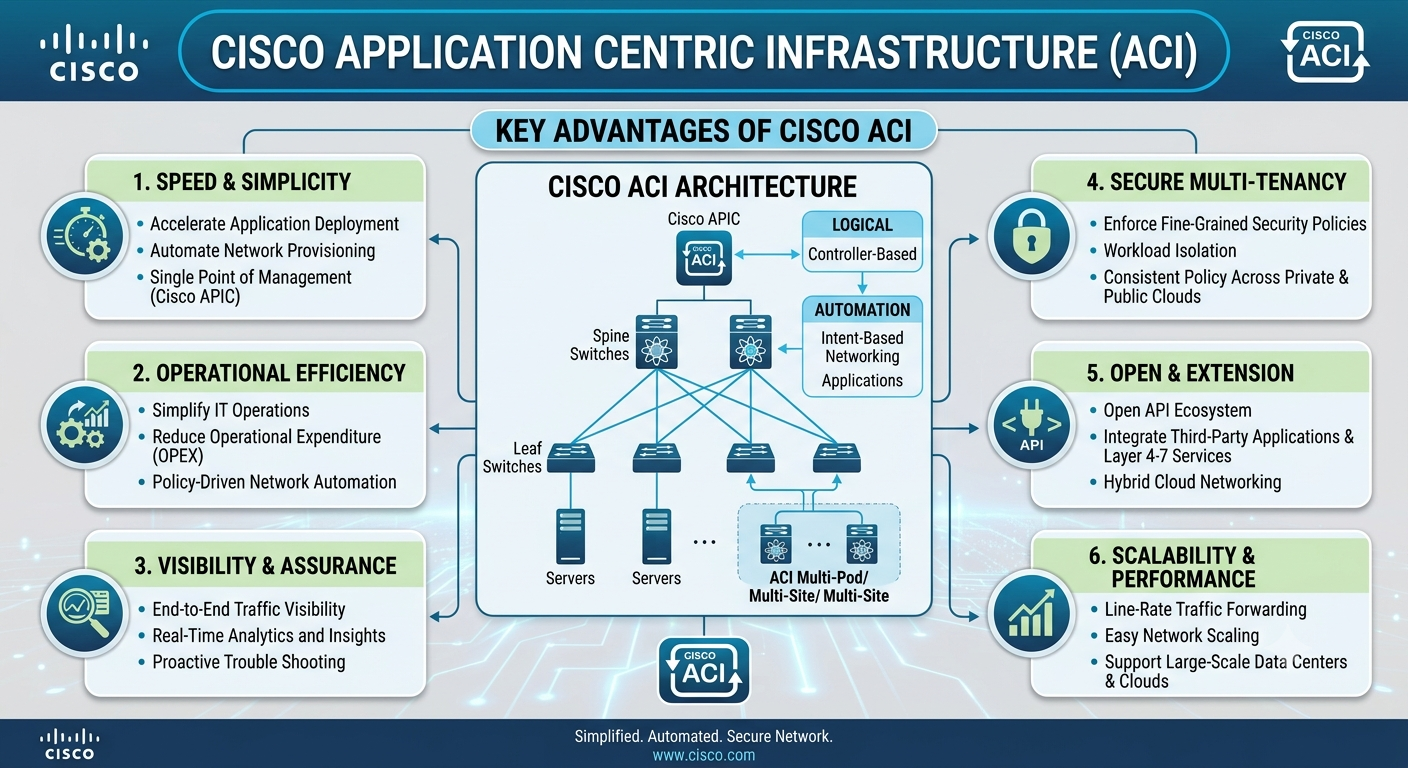
Service delivery typically includes:
ACI fabric design: planning leaf-spine topology and hardware roles (spines, leaves, border leaves, etc.)
Application modeling: translating business apps into Endpoint Groups (EPGs) and policy constructs
Policy design and governance: defining who can talk to what, and under what conditions, without manual ACL sprawl
Integration services: connecting ACI with firewalls, load balancers, identity systems, and cloud platforms
Automation workflows: reducing manual provisioning by using policy templates and orchestration tools
Operational handover and tuning: because yes, someone still has to troubleshoot when policies behave “unexpectedly”
Business outcome: faster provisioning, fewer configuration errors, and a network that behaves more like software than hardware archaeology.
How Safenet ties all of this together
In real-world delivery, companies like Safenet.au don’t treat VXLAN, SD-WAN, and ACI as separate silos.
Instead, they typically build an integrated model:
SD-WAN connects branches and cloud edges
VXLAN structures the data center fabric
ACI automates and enforces application-level policies inside the data center